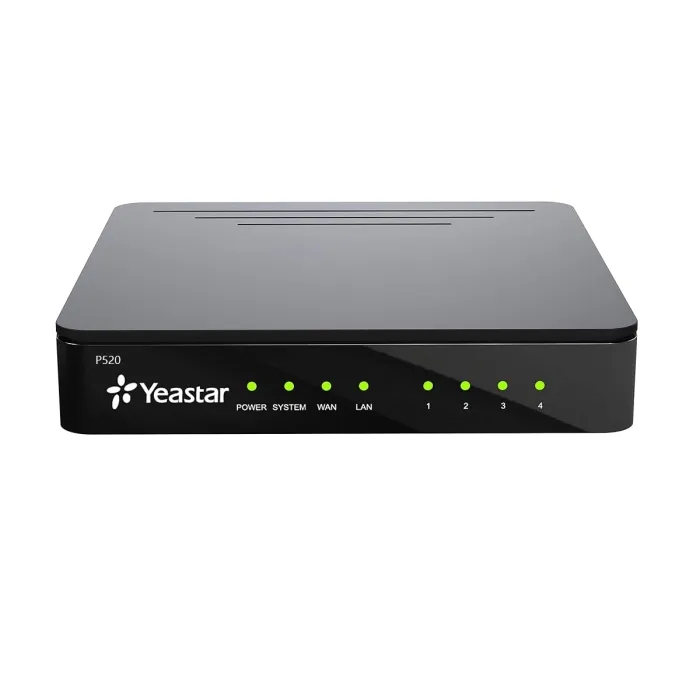
Yeastar P520 IP PBX: Enterprise Communication System for Mid-Size Organizations
The Yeastar P520 IP PBX provides scalable communication infrastructure for organizations requiring up to 500 users and 200 concurrent calls. This appliance-based phone system combines unified communications, call center functionality, and multi-site connectivity in a single hardware platform. Mid-sized enterprises, multi-location businesses, and growing organizations seeking feature-rich telephony without cloud dependency will find this system essential for professional communication management.
Technical Specifications
System Capacity
- Maximum Users: 500 extensions
- Concurrent Calls: 200 simultaneous connections
- SIP Trunks: 200 trunk registrations
- Conference Bridges: 32 rooms with 60 participants each
- Call Queues: 100 queues with unlimited agents
- Voicemail Boxes: 500 individual mailboxes
- Call Recording Storage: Up to 2000 hours (hardware dependent)
Tenant Configuration
- Multi-Tenant Support: Up to 50 independent tenants
- Tenant Isolation: Separate dial plans, trunks, and feature access
- Per-Tenant Resources: Configurable extension limits and concurrent call allocation
- Management Hierarchy: System administrator and tenant administrator roles
Network & Connectivity
- Ethernet Ports: 2 × 10/100/1000 Mbps Gigabit (LAN/WAN)
- Network Protocols: SIP, IAX2, TCP/IP, UDP, RTP, SRTP, TLS
- VPN Support: OpenVPN, IPsec for secure site-to-site connectivity
- QoS Mechanisms: 802.1p/Q VLAN, ToS/DiffServ, bandwidth management
- Network Security: Stateful firewall, fail2ban, geographic IP blocking
- IPv6 Support: Dual-stack IPv4/IPv6 operation
Voice & Media Processing
- Codec Support: G.711a/μ, G.722, G.726, G.729, Opus, GSM, iLBC
- Transcoding: Hardware-accelerated codec conversion
- DTMF Methods: RFC 2833, SIP INFO, in-band detection
- Fax Support: T.38 fax over IP with fallback to G.711 passthrough
- Echo Cancellation: ITU-T G.168 hardware DSP with 128ms tail length
- Music on Hold: Multiple audio sources, per-tenant customization
Call Center Features
- Queue Types: Ring all, round robin, least recent, fewest calls, random
- Agent Management: Login/logout, pause codes, skill-based routing
- Real-Time Monitoring: Live dashboard with queue statistics and agent status
- Historical Reports: Call volume, service levels, agent performance metrics
- Callback Queuing: Automatic callback when agents become available
- Whisper/Barge/Monitor: Supervisor intervention capabilities
Advanced Call Features
- Auto-Attendant: Multi-level IVR with TTS and custom audio prompts
- Call Recording: Automatic, on-demand, scheduled, compliance recording
- Ring Groups: Hunt groups, simultaneous, sequential, priority-based
- Time Conditions: Schedule-based routing and feature activation
- Paging/Intercom: Multicast paging, one-way/two-way intercom
- Call Parking: Directed and blind parking with visual indicators
Unified Communications
- Presence Management: BLF monitoring across extensions
- Video Calling: WebRTC video calls, SIP video support
- Instant Messaging: Built-in chat with presence integration
- Voicemail Features: Voicemail-to-email, visual voicemail, transcription
- Mobile Integration: Linkus mobile client for iOS and Android
- Desktop Softphone: Linkus Desktop for Windows and macOS
Integration & Development
- API Types: RESTful API, Websocket API, AJAM
- Webhooks: Event-driven notifications for third-party systems
- LDAP/AD Integration: Directory synchronization, single sign-on
- CRM Connectors: Pre-built integrations for Salesforce, Zoho, others
- Database Access: MySQL/MariaDB backend for custom reporting
- Provisioning: Auto-provisioning for major IP phone manufacturers
Management & Monitoring
- Web Interface: Responsive browser-based administration
- CLI Access: SSH command-line interface for advanced configuration
- SNMP Support: Network management system integration
- Syslog Integration: Centralized logging to external servers
- Email Alerts: Configurable notifications for system events
- Remote Management: Cloud-based MyPBX portal access
High Availability
- Failover Mode: Active-standby with automatic detection
- Sync Interval: Real-time configuration and CDR synchronization
- Switchover Time: <30 seconds for automatic failover
- Heartbeat Monitoring: Network-based health checking
- Manual Failover: Administrator-initiated switchover capability
Hardware Platform
- Processor: Intel Core i5 quad-core processor
- Memory: 8GB DDR4 RAM
- Storage: 500GB SSD for system and recordings
- RAID Support: Optional RAID1 configuration for data protection
- USB Ports: 4 × USB 3.0 for backup and external storage
Power & Environmental
- Power Supply: Redundant hot-swappable PSU (optional)
- Power Input: 100-240V AC, 50/60Hz auto-sensing
- Power Consumption: 60W typical, 80W maximum
- Operating Temperature: 0°C to 40°C (32°F to 104°F)
- Storage Temperature: -20°C to 70°C (-4°F to 158°F)
- Humidity: 10% to 90% non-condensing
- Noise Level: <35dB at 1 meter
Physical Specifications
- Form Factor: 2U rackmount chassis
- Dimensions: 482mm × 450mm × 88mm (W × D × H)
- Weight: 8.5kg
- Mounting: Rack-mount rails included, desktop placement option
- Ventilation: Dual cooling fans with intelligent speed control
Regulatory Compliance
- Safety Standards: CE, FCC, RoHS compliant
- VoIP Standards: SIP RFC 3261, ITU-T recommendations
- Security Standards: TLS 1.2/1.3, SRTP, AES encryption
Use Cases & Applications
Multi-Site Enterprise Deployment
Organizations operating across multiple locations establish unified communication infrastructure through VPN-connected P520 systems. The Yeastar P520 IP PBX enables transparent extension dialing between headquarters, regional offices, and remote facilities without long-distance charges. Manufacturing companies coordinate production scheduling across plants while sales teams collaborate seamlessly regardless of physical location, maintaining consistent communication workflows.
Contact Center Operations
Customer service organizations deploy comprehensive call center functionality without expensive specialized hardware. The P520 system provides agent queue assignment, real-time monitoring dashboards, and historical performance reporting essential for service level management. Supervisors monitor call quality through whisper and barge features while managers analyze trends identifying training opportunities or staffing adjustments based on queue statistics.
Managed Service Provider Platform
MSPs serve multiple business clients through isolated tenant configurations within single hardware platforms. The Yeastar P520 IP PBX allocates dedicated resources, separate dial plans, and independent feature access for each tenant while centralizing infrastructure management. Service providers reduce hardware costs while maintaining complete separation between client environments, billing accurately for consumed resources and delivered services.
Healthcare Communication Systems
Medical facilities manage complex communication requirements including emergency paging, department-specific call routing, and HIPAA-compliant call recording. The P520 system integrates nurse call systems, coordinates physician on-call rotations, and maintains detailed communication logs for regulatory compliance. Hospitals implement multi-site connectivity linking clinics, administrative offices, and satellite facilities into unified communication networks.
Financial Services Infrastructure
Banks and financial institutions require secure, reliable communication platforms supporting compliance recording and business continuity requirements. The Yeastar P520 IP PBX provides comprehensive call recording with tamper-evident storage, encrypted signaling for sensitive conversations, and high-availability configurations ensuring continuous operation. Branch locations connect securely to headquarters through VPN tunnels while maintaining local survivability during network interruptions.
Educational Institution Networks
Universities and school districts coordinate communication across campuses, administrative buildings, and remote learning facilities. The P520 system manages extension assignments for faculty, departmental call routing, and emergency notification systems reaching entire campuses. Registrar offices handle enrollment inquiries through dedicated queues while maintenance departments coordinate through paging systems integrated with the phone infrastructure.
Business Process Outsourcing
BPO operations supporting multiple client campaigns require flexible queue management and detailed performance analytics. The P520 system enables campaign-specific routing, agent skill-based assignment, and client-separated reporting within unified infrastructure. Supervisors monitor service level compliance in real-time, adjusting staffing dynamically based on call volume patterns and contractual obligations.



 No products in the cart.
Reviews
There are no reviews yet.