Large 180cm x 180cm viewing area: The square surface works out to roughly a 100-inch diagonal, so everyone in a mid-sized room can read slides and see video clearly.
Versatile 1:1 square format: The equal width and height let you frame 4:3 presentations, 16:9 video, or full square content simply by adjusting how far you pull the screen down.
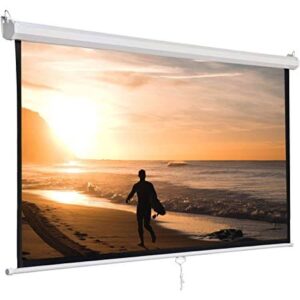
Simple manual pull-down operation: There are no motors, remotes, or power cables to fail. You pull the screen down when needed and retract it afterwards, which keeps maintenance at zero.
Wall or ceiling mounting: The housing installs against a wall or overhead, so the screen adapts to boardrooms, lecture halls, and living rooms alike. It also retracts neatly out of sight when not in use.
Consistent, flat projection surface: Unlike projecting onto a painted wall, a dedicated screen surface reflects light evenly. As a result, text looks sharper and colours appear more accurate.
Extra-large 200cm x 200cm surface: The bigger fabric adds about 23% more viewing area than a 180cm screen, so audiences of 30 or more can still read fine text from the back of the room.
Flexible 1:1 square format: Pull the fabric fully down for square content, or stop partway to frame widescreen 16:9 video and classic 4:3 slides. One screen handles every source format.
No power, no electronics: The manual roller mechanism works anywhere, including venues with limited sockets. Furthermore, nothing electrical means nothing to service or replace.
Dual wall and ceiling installation: The housing mounts flat against a wall or hangs from the ceiling, which keeps floor space clear in busy training rooms and halls.
Retracts when not in use: Between sessions, the fabric rolls back into its housing. This protects the surface from dust, scratches, and marker accidents that ruin exposed screens.
133-inch class viewing area: The 240cm x 240cm fabric is the largest in the electric range, so audiences of 50 or more follow slides, lyrics, and video clearly from the back of a hall.
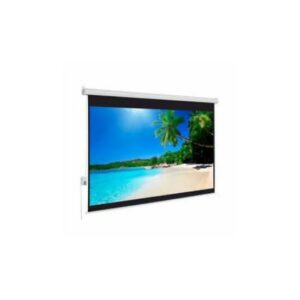
Motorised deployment and retraction: The screen glides down and disappears again electrically. On fabric this large, that matters — manual pulling at this size is awkward and wears the surface unevenly.
Matte white fabric with black borders: The matte white surface reflects projected light evenly at a standard 1.0 gain, while the black borders frame the image and lift perceived contrast.
Adaptable 1:1 square format: Stop the drop at any height to frame 16:9 video, 4:3 slides, or the full square. Additionally, a partial drop keeps the bottom edge clear of stages and pulpits.
Fixed wall or ceiling installation: The housing mounts permanently, pairing cleanly with a ceiling-mounted projector for a professional, cable-tidy venue setup.
Motorised operation: The screen deploys and retracts electrically, which removes the stretching, tugging, and uneven stops of manual screens. Meetings start faster and the fabric lasts longer.
100-inch class viewing area: The 180cm x 180cm surface spans roughly 100 inches diagonally, so slides, spreadsheets, and video remain readable across a mid-sized room.
Consistent, even fabric travel: Because the motor winds the fabric uniformly, the surface hangs flatter than a hand-pulled screen. Flatter fabric means straighter lines and sharper projected text.
Adaptable 1:1 square format: Stop the screen at any drop height to frame 16:9 video, 4:3 slides, or full square content. Additionally, partial deployment suits rooms with low projector mounts.
Fixed, professional installation: The housing mounts permanently to a wall or ceiling, giving meeting rooms a clean, built-in appearance with no tripod legs or handles in view.
Large 110-inch class surface: The 200cm × 200cm fabric gives audiences of 30 or more a clear view of slides, scripture, and video, even from the back rows of a hall.
One-touch motorised deployment: The screen glides down and disappears again electrically, so sessions start on time and nobody wrestles with a pull handle in front of an audience.
Even fabric winding for a flatter picture: A motor rolls the large fabric uniformly on every cycle. On a surface this size, that consistency visibly reduces waves and keeps projected text straight.
Adjustable drop for any format: Stop the fabric at any height to frame 16:9 video, 4:3 slides, or the full 1:1 square. Additionally, a partial drop suits stages where the bottom edge must clear equipment.
Clean, fixed AV installation: The housing mounts permanently to a wall or ceiling, which pairs neatly with a ceiling-mounted projector for a tidy, professional venue setup.
Auditorium-scale 167-inch class image: The 300cm x 300cm surface keeps text and video legible for audiences of 100 or more, including viewers seated more than ten metres back.
Motorised operation is essential at this size: A three-metre fabric drop is impractical to pull by hand. The internal motor deploys and retracts it smoothly, evenly, and without a ladder.
One screen, every format: Stop the drop at any height to frame 16:9 video, 4:3 presentations, or the full 1:1 square. Additionally, partial deployment keeps the bottom edge above stages and platforms.
Consistent fabric tension across a huge surface: Motorised winding keeps the large fabric flatter over time than manual handling would. On an image this wide, flatness directly affects how straight projected text appears.
Permanent, professional installation: The housing fixes to a wall or ceiling as part of the venue's AV infrastructure, which keeps floors clear and presentation setup at zero.
Motorised operation: Raise or lower the screen remotely without ladders or manual cords. This matters in venues with high ceilings, where a manual screen would be out of reach.
200-inch class viewing area: The 400 x 300cm surface remains readable from the back rows of large halls. Text-heavy presentations and worship lyrics stay legible at distance.
4:3 aspect ratio: This format matches most business and education projectors. It also handles 16:9 video comfortably, with unused space above and below the image.
Even fabric tensioning: The weighted bottom bar keeps the surface flat as it unrolls. As a result, you avoid the waviness and image distortion common on ageing manual screens.
Retractable housing: The screen rolls fully away after use. Therefore, the projection surface stays clean in dusty halls and multi-purpose rooms.
Massive 240cm x 240cm viewing area: At around 133 inches diagonal, this is the largest screen in its class. Audiences of 50 or more can follow slides and video clearly, even in halls and tents.
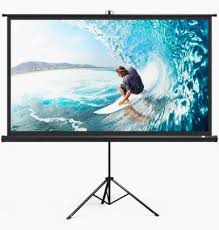
Free-standing tripod base: The screen stands on its own three legs, so you avoid drilling, brackets, and landlord permissions entirely. Set it against any wall, on any stage, or in the open.
Portable and quick to deploy: The tripod folds flat and the fabric rolls into its housing, which makes transport in a car boot practical. Furthermore, one person can set it up or pack it down in a few minutes.
Adjustable height positioning: Raise or lower the screen on the tripod column to match your projector line and audience sightlines. This matters in venues with stages, raised seating, or low projector stands.
Flexible 1:1 square format: Extend the fabric fully for square content, or partially to frame 16:9 video and 4:3 presentations. One screen covers every source you'll plug in.




 No products in the cart.