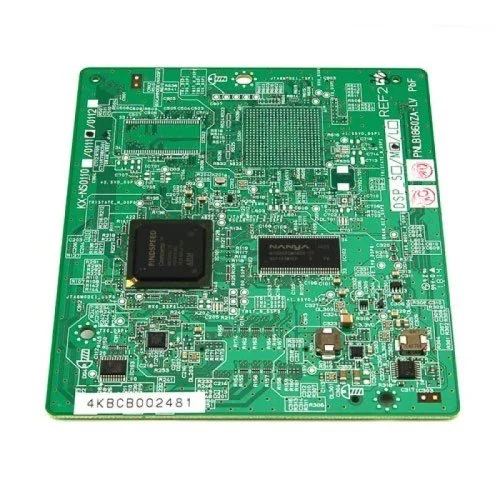
Panasonic KX-NS5110X: VoIP DSP Card for NS Series Communication Systems
The Panasonic KX-NS5110X enables Voice over IP functionality and media processing for NS Series hybrid telephone systems. This digital signal processing card handles voice codec conversion, echo cancellation, and tone generation for up to 128 simultaneous VoIP channels. Designed for enterprises migrating to IP-based communications, the KX-NS5110X provides the computational resources necessary for SIP trunking, remote worker connectivity, and multi-site networking.
Technical Specifications
System Compatibility
- Compatible Platforms: Panasonic KX-NS500, KX-NS1000
- Card Slot Type: VoIP DSP slot (VOIP slot)
- Required System Version: NS Series firmware v3.0 or higher
Voice Processing Capacity
- Maximum VoIP Channels: 128 simultaneous calls
- Supported Codecs: G.711 (64 kbps), G.729A (8 kbps), G.722 (wideband), G.726
- Echo Cancellation: ITU-T G.168 compliant, 128ms tail length
- Jitter Buffer: Adaptive buffering up to 200ms
- DTMF Detection: In-band and out-of-band (RFC 2833) methods
Network Protocols
- VoIP Protocol: SIP (Session Initiation Protocol)
- QoS Support: DiffServ (DSCP), 802.1p/Q tagging
- Voice Activity Detection: Bandwidth optimization during silence periods
- Comfort Noise Generation: Background noise synthesis for natural call quality
Physical Characteristics
- Form Factor: Single DSP expansion card
- Installation Method: Hot-swappable slot mounting
- Operating Temperature: 0°C to 40°C (32°F to 104°F)
- Storage Temperature: -20°C to 60°C (-4°F to 140°F)
- Humidity Range: 10% to 90% non-condensing
Power Requirements
- Power Source: Supplied via NS Series main chassis
- Power Consumption: Approximately 25W at full channel capacity
- Cooling: Passive convection cooling
Use Cases and Applications
The KX-NS5110X proves essential for organizations implementing SIP trunking to reduce telecommunications expenses. Businesses can replace costly PSTN lines with internet-based calling services, achieving significant monthly savings on long-distance and international communications. Moreover, the multi-codec support ensures optimal bandwidth utilization across varying network conditions.
Multi-location enterprises benefit from interconnecting branch offices through VoIP networking. The DSP card enables extension dialing between sites without consuming PSTN resources, creating unified communication environments. Additionally, remote workers connect seamlessly through SIP clients or IP phones, maintaining full feature access regardless of physical location.
Call centers handling high concurrent call volumes require substantial DSP resources. A single KX-NS5110X card supports 128 simultaneous VoIP channels, accommodating medium-sized contact center operations. Furthermore, the hardware-based echo cancellation improves agent and customer experience by eliminating audio artifacts common in software-only implementations.
Organizations transitioning from legacy PBX systems appreciate the hybrid capabilities. The DSP card allows gradual migration by supporting simultaneous operation of traditional analog lines and modern SIP trunks. Consequently, businesses can test VoIP service quality before completely abandoning PSTN infrastructure.
Healthcare facilities connecting multiple clinic locations utilize the VoIP processing for secure inter-office communication. The QoS support ensures voice traffic receives network priority over data applications, maintaining call quality during high network utilization periods. Medical staff can consult colleagues across locations without incurring per-minute charges.
Hospitality chains leverage the KX-NS5110X for centralized reservation systems. Guest inquiries route through IP connections to central booking offices, reducing individual property telecommunications costs. The wideband G.722 codec delivers superior audio clarity, enhancing customer service interactions.
Educational institutions with distributed campuses benefit from unified communication infrastructure. Administrative departments, residence halls, and academic buildings connect through IP telephony, simplifying system management. The hot-swappable design allows IT departments to expand capacity during enrollment growth without scheduling maintenance windows.

 No products in the cart.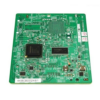
Reviews
There are no reviews yet.