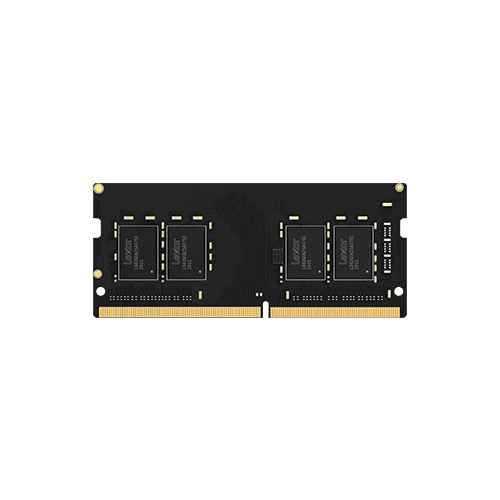
Lexar 8GB DDR4 3200MHz UDIMM Desktop Memory (LD4AU008G-B3200GSST)
The Lexar 8GB DDR4 3200MHz UDIMM is a desktop memory module built for users who want a straightforward performance upgrade without changing their entire system. Running at 3200MHz on a standard 288-pin interface, the Lexar 8GB DDR4 desktop module works with a broad range of DDR4-compatible motherboards and suits home users, office workstations, and entry-level productivity builds. It operates at 1.2V with JEDEC-standard CL22 timings, requiring no BIOS configuration after installation.
Technical Specifications
Memory
| Specification | Detail |
|---|---|
| Capacity | 8GB |
| Memory Type | DDR4 |
| Form Factor | UDIMM (288-Pin) |
| Module Configuration | Single module |
Performance
| Specification | Detail |
|---|---|
| Speed | 3200MHz (DDR4-3200) |
| Bandwidth | PC4-25600 (25,600 MB/s) |
| CAS Latency | CL22 |
| Timing | 22-22-22 |
| Profile | JEDEC Standard |
Electrical
| Specification | Detail |
|---|---|
| Operating Voltage | 1.2V |
| ECC Support | Non-ECC |
| Buffering | Unbuffered |
General
| Specification | Detail |
|---|---|
| Part Number | LD4AU008G-B3200GSST |
| Heatsink | None |
| Compatible Systems | DDR4 UDIMM desktop motherboards (Intel and AMD) |
| Warranty | Limited Lifetime Warranty |
Use Cases and Applications
Home and Office Desktop Upgrades
Desktop systems shipped with 4GB or a single 8GB module at lower DDR4 speeds often show measurable lag when several applications run simultaneously. Installing this module alongside an existing stick — or as a replacement — adds capacity and speed headroom for everyday tasks such as web browsing, email, spreadsheet work, and video calls. Additionally, users running accounting software, ERP clients, or other business applications with large data sets benefit from the reduced page-file reliance that comes with more available RAM.
General Productivity and Media Consumption
Users who stream video, work with large browser sessions, and run background utilities concurrently place constant demand on system memory. This module handles those parallel processes without the stuttering that occurs when available RAM runs short. However, users whose workflows involve video encoding, 3D rendering, or large virtual machine instances will find that 8GB approaches its limits and should consider a 16GB module or a dual-channel configuration using two matched sticks.
Entry-Level System Builds and Budget Workstations
Builders assembling cost-efficient desktop systems around mid-range Intel or AMD platforms often start with a single 8GB module, leaving the second slot open for a future upgrade. This module serves that use case well — it runs at a speed appropriate for current DDR4 platforms, uses no heatspreader to keep clearance simple, and carries a limited lifetime warranty that reflects confidence in long-term reliability.
 No products in the cart.
Reviews
There are no reviews yet.