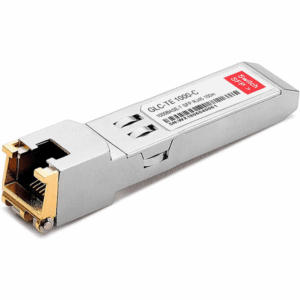
Standard Copper Cable Compatibility: Supports Gigabit Ethernet transmission over standard Cat5e, Cat6, and Cat6a copper cabling up to 100 meters, enabling organizations to leverage existing structured cabling investments. Consequently, network upgrades can proceed without costly fiber optic infrastructure installation while maintaining full Gigabit performance across copper links.
Hot-Swappable Operation: Allows installation and removal while host equipment remains powered and operational, eliminating scheduled downtime for port configuration changes or transceiver replacement. As a result, network administrators can convert fiber ports to copper connectivity or perform equipment maintenance without disrupting network services or requiring maintenance windows.
Auto-Negotiation and Auto-MDIX: Automatically detects and configures optimal speed, duplex settings, and cable pinout configurations without manual intervention or specialized crossover cables. Furthermore, this intelligent configuration capability reduces deployment errors and simplifies troubleshooting by eliminating common connectivity issues related to speed mismatches or incorrect cabling.
Low Power Consumption: Operates with typical power consumption under 1 watt, enabling high-density switch deployments without excessive heat generation or power infrastructure requirements. Therefore, organizations can maximize port density in space-constrained equipment rooms while maintaining efficient power utilization and reduced cooling costs.
Broad Platform Compatibility: Supports installation in Cisco switches, routers, and network devices equipped with SFP transceiver slots across multiple product families. In addition, this wide compatibility enables organizations to standardize on copper connectivity solutions across diverse networking equipment while simplifying spare parts inventory and procurement processes.
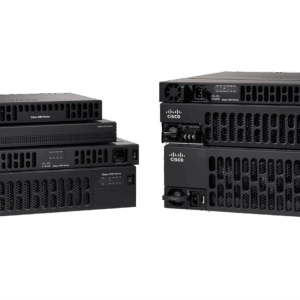
High-Performance Routing Engine: Delivers up to 300 Mbps aggregate throughput with advanced security services enabled, supporting bandwidth-intensive applications without performance degradation. Consequently, branch offices can run multiple concurrent services including firewall inspection, VPN encryption, and application visibility while maintaining consistent network performance.
Modular Network Interface Cards (NIMs): Supports three front-panel NIM slots accepting various interface modules including Ethernet, serial, T1/E1, and wireless connectivity options. Furthermore, this modularity allows businesses to customize router configurations based on specific connectivity requirements and adapt to changing network demands without replacing the entire platform.
Integrated Security Services: Includes embedded security features supporting Cisco IOS Zone-Based Firewall, IPsec VPN, and advanced threat protection through optional subscription services. As a result, organizations consolidate multiple security functions into a single platform, reducing hardware costs and simplifying security policy management across distributed locations.
Redundant Power Supply Options: Accommodates optional secondary power supply module for critical deployments requiring maximum uptime and service continuity. Therefore, businesses in industries such as retail, healthcare, and financial services can maintain network connectivity during power failures or planned maintenance activities.
SD-WAN and Application Optimization: Supports Cisco SD-WAN capabilities with application-aware routing, dynamic path selection, and centralized policy management. In addition, integrated application optimization features including WAAS (Wide Area Application Services) improve performance for cloud-based applications and reduce WAN bandwidth consumption for distributed file sharing.
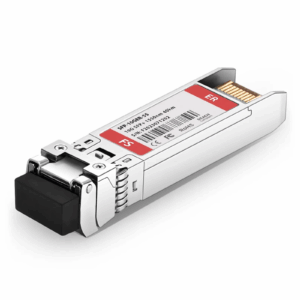
40km Extended Transmission Distance: Supports single-mode fiber connections up to 40 kilometers at full 10 Gigabit Ethernet speeds, enabling connectivity across metropolitan areas and between geographically dispersed facilities. Consequently, organizations can interconnect remote data centers, establish disaster recovery links, or connect to carrier points of presence without requiring intermediate optical amplification or signal regeneration equipment.
1550nm Wavelength Operation: Utilizes industry-standard 1550nm wavelength optimized for long-distance single-mode fiber transmission with minimal attenuation and dispersion. Furthermore, this wavelength choice provides maximum transmission distance capability over existing fiber infrastructure while maintaining signal integrity and reliable data delivery across extended fiber spans.
Hot-Swappable Capability: Allows installation and removal while host network equipment remains powered and operational, eliminating scheduled maintenance windows for transceiver replacement or upgrades. As a result, network administrators can perform troubleshooting, conduct equipment swaps, and implement network modifications without disrupting critical business services or requiring complex change management procedures.
Digital Optical Monitoring (DOM): Provides real-time telemetry including optical transmit power, receive power, temperature, laser bias current, and supply voltage through standard management interfaces. In addition, this comprehensive monitoring enables proactive identification of fiber degradation, predicts component failures before service impact, and facilitates data-driven maintenance strategies for optimizing network reliability.
Broad Platform Compatibility: Supports deployment across extensive Cisco product portfolios including enterprise switches, service provider routers, data center fabric switches, and network interface cards equipped with SFP+ transceiver slots. Therefore, organizations can standardize on proven optical connectivity solutions across diverse networking environments while simplifying inventory management and reducing spare parts complexity.
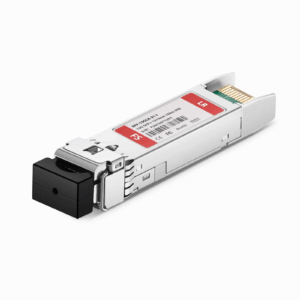
10km Transmission Distance: Supports single-mode fiber connections up to 10 kilometers at full 10 Gigabit Ethernet speeds, enabling long-distance connectivity between buildings and facilities. Consequently, organizations can interconnect remote campus buildings, connect to colocation facilities, or establish metro area network links without requiring signal regeneration equipment.
Hot-Swappable Operation: Allows installation and removal while host equipment remains powered and operational, eliminating scheduled downtime for transceiver maintenance or upgrades. Furthermore, this capability enables rapid troubleshooting and field replacement without disrupting network services for connected users and applications.
Digital Optical Monitoring (DOM): Provides real-time monitoring of optical power levels, temperature, laser bias current, and transceiver voltage through standard management interfaces. As a result, network administrators can proactively identify degrading fiber connections, predict failures before they occur, and maintain optimal network performance through data-driven maintenance practices.
1310nm Wavelength Operation: Utilizes industry-standard 1310nm wavelength optimized for single-mode fiber transmission, ensuring compatibility with existing fiber infrastructure and industry standards. In addition, this wavelength choice minimizes chromatic dispersion effects over long distances, maintaining signal integrity and reliable data transmission.
Wide Platform Compatibility: Supports installation in Cisco switches, routers, and network interface cards equipped with SFP+ transceiver slots across multiple product families. Therefore, organizations can standardize on a single transceiver model for diverse networking equipment, simplifying spare parts inventory and reducing procurement complexity.
Cost-Effective Short-Reach Solution: Utilizes multi-mode fiber infrastructure supporting distances up to 400 meters, providing economical connectivity for data center and campus applications where extended reach is unnecessary. Consequently, organizations can deploy high-density 10 Gigabit Ethernet connections at significantly lower cost per port compared to long-reach single-mode alternatives.
850nm VCSEL Technology: Employs vertical-cavity surface-emitting laser (VCSEL) operating at 850nm wavelength optimized for multi-mode fiber transmission with reduced power consumption and heat generation. Furthermore, this proven technology delivers reliable performance while maintaining lower operating costs and simplified thermal management in high-density switching environments.
Multi-Mode Fiber Compatibility: Supports OM1, OM2, OM3, and OM4 multi-mode fiber types with distance capabilities ranging from 33 meters to 400 meters depending on fiber grade. In addition, this flexibility allows organizations to utilize existing multi-mode fiber infrastructure without costly fiber replacement while planning for future upgrades to enhanced fiber types.
Hot-Swappable Operation: Allows installation and removal while host equipment remains powered and operational, eliminating scheduled downtime for transceiver maintenance or network topology changes. As a result, data center operators can perform equipment moves, adds, and changes without impacting production workloads or requiring application maintenance windows.
Digital Optical Monitoring (DOM): Provides real-time monitoring of optical power levels, temperature, laser bias current, and transceiver voltage through standard management interfaces. Therefore, network administrators can proactively identify connectivity issues, predict component failures, and maintain optimal network performance through data-driven infrastructure management practices.
 No products in the cart.